AnonVault Explained: What It Is, How It Works, and Is It Safe?
If you have been reading about anonvault and cannot tell whether it is a real privacy tool or just hype, this guide clears it up. In plain terms, anonvault is the name used for anonymous, encrypted online storage that promises to keep your files private, and here you will get an honest look at how that technology works and whether you should trust it.
You will learn what the service claims to do, how the privacy features actually protect data, the real questions to ask before uploading anything sensitive, and safer, proven options if you decide it is not for you. No marketing spin, just clear facts so you can make a smart choice.
What AnonVault Is Meant to Be
At its core, anonvault is described as a secure, anonymous cloud storage service. The idea is simple: you upload files, they get locked with strong encryption, and the company running it supposedly cannot read them. On top of that, it promises you can sign up and use it without giving your name, email, or phone number.
That combination, private files plus a private identity, is the whole selling point. It is aimed at people who want to store sensitive documents, photos, or notes without a big tech company scanning them or a data breach exposing them.
It helps to be clear about one thing early. “AnonVault” is more of a concept and a name that several sites promote than a single, household-name product. The technology behind it is real and widely used, but the specific service is lesser known, and that matters when you decide how much to trust it.
Quick Facts at a Glance
Here is a fast summary so you can size it up in seconds.
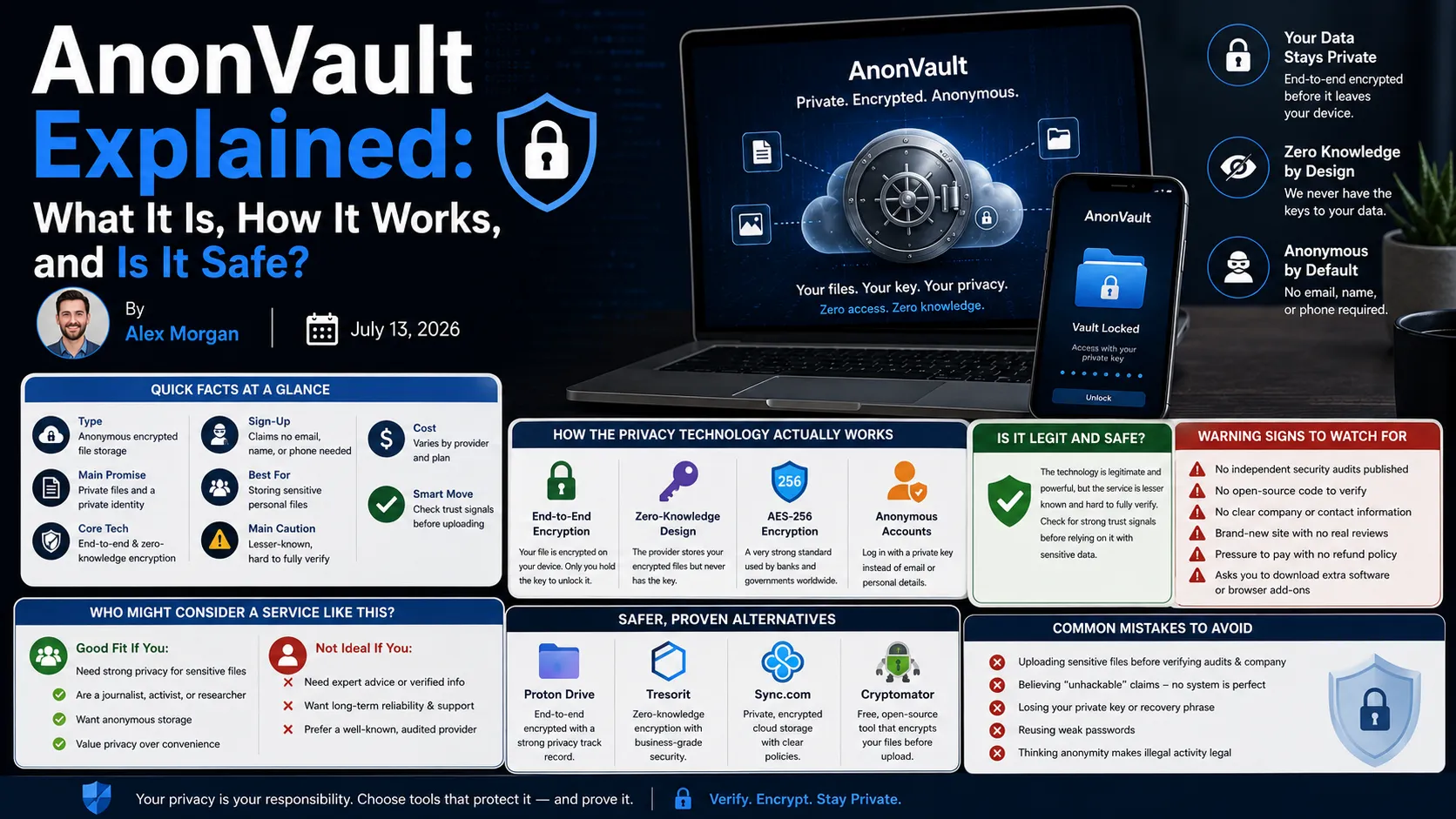
| Detail | What to Know |
|---|---|
| Type | Anonymous encrypted file storage |
| Main promise | Private files and a private identity |
| Core tech | End-to-end and zero-knowledge encryption |
| Sign-up | Claims no email, name, or phone needed |
| Best for | Storing sensitive personal files |
| Main caution | Lesser-known, hard to fully verify |
| Cost | Varies by provider and plan |
| Smart move | Check trust signals before uploading |
The table shows the trade-off clearly. The privacy promise is appealing, and the underlying encryption is legitimate technology. The catch is that it is not a well-known, heavily audited brand, so you are trusting a smaller name with your data. Keep that balance in mind as you read on.
How the Privacy Technology Actually Works
The good news is that the security ideas behind anonvault are real and used by respected apps. Understanding them in plain English helps you judge any privacy tool, not just this one.
- End-to-end encryption. Your file is scrambled on your own device before it ever leaves. Only you hold the key to unscramble it, so anyone who intercepts it sees useless code.
- Zero-knowledge design. The company stores your locked files but never holds the key. That means even its own staff cannot open your data, which is the point of “zero knowledge.”
- AES-256 encryption. This is a very strong, widely trusted standard used by banks and governments. It is considered practically impossible to crack with today’s technology.
- Anonymous accounts. Instead of an email and password, some services give you a private key as your only login, so your files are never tied to your real identity.
When these pieces work together, they create genuinely strong protection. The trick is knowing whether a specific provider truly implements them, or just claims to.
Is AnonVault Legit and Safe?
This is the honest heart of the matter. The technology anonvault describes is legitimate, but the service itself is hard to fully verify, and that is exactly where caution belongs. A privacy tool is only as trustworthy as the company behind it, because you cannot see what happens on their servers. If you want the technical background, the zero-knowledge concept is well documented.
Here are the trust signals worth checking before you rely on any anonymous vault:
- Independent security audits. Trustworthy privacy tools pay outside experts to test them and publish the results. No audit means no proof.
- Open-source code. When the code is public, anyone can confirm the encryption works as promised. Closed, secret code asks you to just trust their word.
- A clear company and track record. Look for a real, identifiable company, a history, and honest reviews from outside sources, not just its own site.
- A readable privacy policy. It should plainly state what it does and does not collect. Vague or missing policies are a warning sign.
If a service cannot show these, that does not automatically make it a scam, but it does mean you are taking a bigger risk. For truly sensitive data, “unverified” should be treated as “not yet trusted.”
Warning Signs to Watch For
Because the privacy space attracts both real tools and copycats, a few red flags deserve your attention. Spotting them protects you from handing your data to the wrong place.
- Over-the-top claims like “unhackable” or “military-grade” with no proof to back them up.
- No named company, address, or way to contact a real support team.
- Pressure to pay only in hard-to-trace ways with no refund policy.
- A brand-new website with no reviews from trusted, independent sources.
- Requests to download extra software or browser add-ons to “unlock” features.
One or two of these is a yellow flag. Several together is a strong reason to walk away and pick a proven option instead.
Who Might Consider a Service Like This
An anonymous vault like anonvault appeals to specific people with real privacy needs. Journalists protecting sources, activists in restrictive regions, or anyone storing legal or medical documents may want storage that is not tied to their identity. For them, the appeal is obvious.
For the average person, though, a well-known encrypted service is usually the smarter pick. You get most of the same protection with far more accountability, a clear company to answer for problems, and a proven track record. The extra anonymity of a lesser-known vault is only worth it when you genuinely need it and have checked it carefully.
Safer, Proven Alternatives
If the idea of encrypted, private storage appeals to you but you want a name you can verify, several established services offer strong, audited security.
- Proton Drive comes from the makers of Proton Mail, with end-to-end encryption and a solid privacy reputation.
- Tresorit is known for zero-knowledge encryption and business-grade security.
- Sync.com offers private, encrypted cloud storage with clear policies.
- Cryptomator is a free, open-source tool that encrypts your files before they go to any cloud you already use.
A quick tip: even with a trusted provider, keep a private backup of anything truly important and never share your master password or recovery key with anyone. The same safety mindset applies to any tool you try, as we cover in our honest site reviews.
Common Mistakes to Avoid
- Uploading sensitive files to any vault before checking for audits and a real company.
- Believing “unhackable” claims, since no system is ever completely unbreakable.
- Losing your private key or recovery phrase, which can lock you out permanently.
- Reusing a weak password that undoes strong encryption.
- Assuming anonymous means legal cover for anything, which it does not.
Avoiding these five mistakes covers most of the real risk people run into with private storage tools.
Frequently Asked Questions
What is anonvault? It is a name for anonymous, encrypted online storage that promises to keep your files private and let you sign up without sharing personal details like your email or name.
Is it a real, safe service? The encryption technology it describes is real and strong, but the service itself is lesser known and hard to fully verify. Treat it with caution until you confirm its trust signals.
How does the anonymous part work? Some versions give you a private cryptographic key instead of an email and password, so your files are never linked to your real identity.
Can my files really not be read by the company? With true zero-knowledge encryption, yes, the company cannot read them because it never holds your key. The challenge is proving a provider actually works that way.
Is it legal to use? Storing your own files privately is legal in most places. Anonymity does not make illegal activity legal, so the tool is only as lawful as what you use it for.
What is a safer alternative? Established, audited services like Proton Drive, Tresorit, or Sync.com give strong encryption with a verifiable company behind them.
What should I check before trusting any vault? Look for independent audits, open-source code, a clear company and privacy policy, and honest outside reviews. Missing these means higher risk.
Final Thoughts
Once you strip away the marketing, anonvault stands for a genuinely useful idea: encrypted storage that keeps both your files and your identity private. The technology behind it, end-to-end encryption, zero-knowledge design, and strong ciphers, is real and trusted across the security world.
The honest catch is that the service itself is a smaller, less-verified name, so the smart move is to check its trust signals before handing over anything sensitive, or choose an established, audited provider instead. Protect your privacy, but do it with a tool you have reason to trust, and you get the security you want without gambling with your most important files.