GFXRobotection AI Software by GFXMaker: Honest 2026 Guide
You spent hours on a design, posted it online, and found it copied on another site a week later. That exact problem is what GFXRobotection AI software by GFXMaker was built to solve. It combines design protection with smart automation, so your graphics stay safe from the moment you create them.
Design theft has become a bigger headache than ever. AI tools can now copy an art style in minutes, and stolen graphics spread across the internet faster than any artist can track by hand. Creators need protection that works automatically in the background.
This guide explains what the software does, how the protection actually works, its main features and benefits, where it falls short, who should use it, and the mistakes people make when protecting their work. By the end, you’ll know whether this tool fits your workflow or not.
What Is GFXRobotection AI Software by GFXMaker?
GFXRobotection is a protection-focused AI tool made for graphic designers, digital artists, freelancers, and small brand teams. GFXMaker, the platform behind it, focuses on graphic design tools, creative technology, and design education resources.
Most AI design tools help you make graphics faster. This one focuses on what happens after your graphic exists. It watches over your finished work, so logos, illustrations, social media posts, and client files don’t get stolen, copied, or misused once they go public.
Think of it like a security guard for your art gallery. The guard doesn’t paint the pictures. The guard makes sure nobody walks out with them.
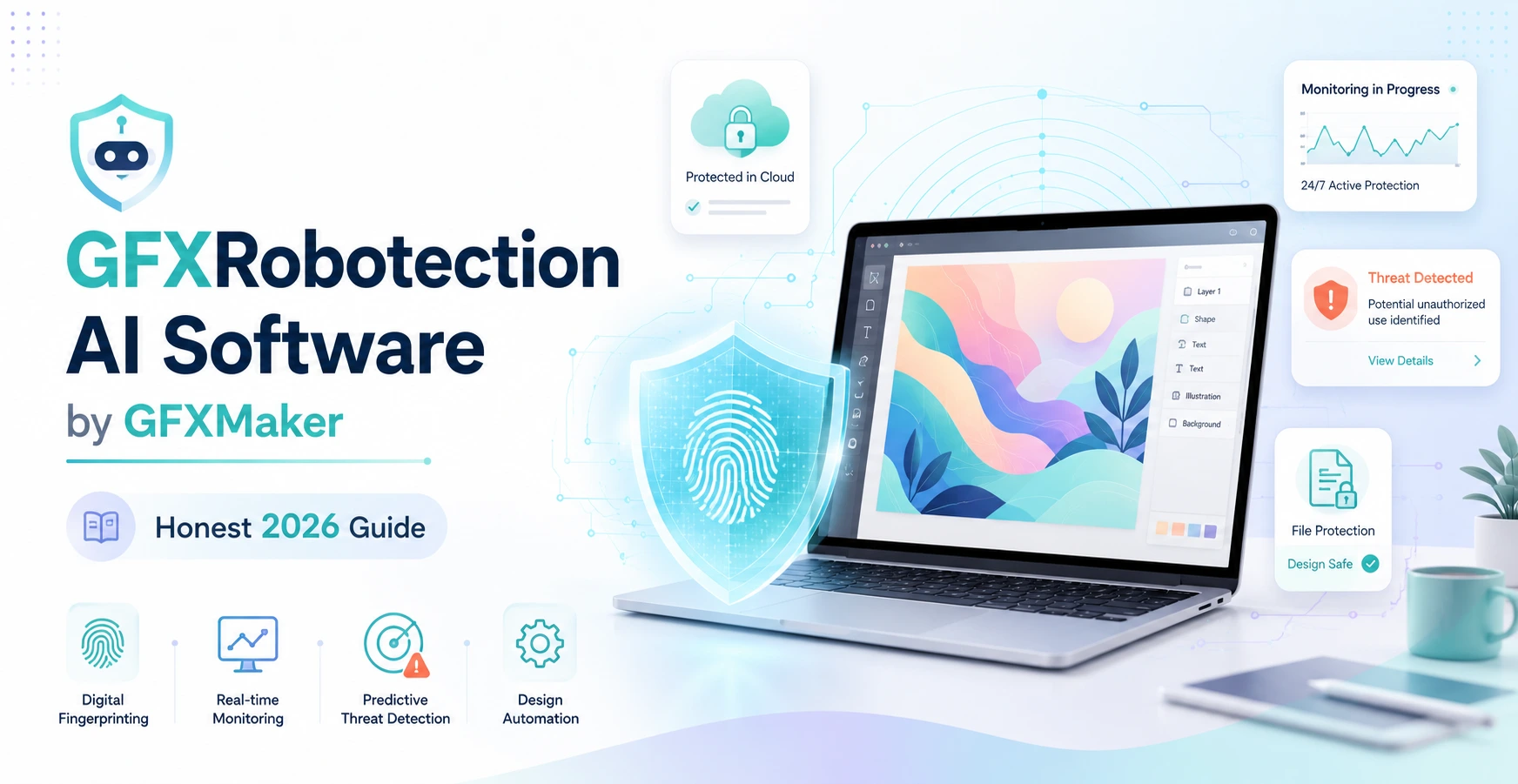
The software handles two jobs at once. First, it protects your designs using digital fingerprinting and constant monitoring. Second, it speeds up your workflow with smart layout suggestions, quick design variations, and time-saving templates.
How the Protection Actually Works
The software uses a layered approach. Each layer covers a different weak spot in the life of a design.
Digital Fingerprinting
Every file you protect gets a unique, invisible fingerprint embedded inside it. You can’t see it, and it doesn’t change how your design looks. But if your file leaks or shows up on another website, that fingerprint helps trace exactly where the copy came from.
This works a lot like an invisible watermark, except it survives compression and minor edits better than a visible logo stamped in the corner.
Real-Time Monitoring
Once your work is fingerprinted, the system scans the internet for copies of it. If someone reposts your illustration without permission, you get an alert instead of finding out months later by accident.
Manual reverse-image searching takes hours and misses most matches. Automated monitoring runs constantly and never gets bored.
Predictive Threat Detection
The machine learning layer studies how design theft usually happens. Instead of only reacting after a copy appears, it flags risky patterns early, like unusual download activity or files being shared in ways you didn’t approve.
Design Automation
Protection is only half the tool. The AI side suggests layouts, generates quick variations of an existing design, and offers templates that cut down repetitive work. This matters because protection tools only get used when they don’t slow you down.
Key Features at a Glance
Here’s a quick summary of what the software offers and who each feature helps most.
| Feature | What It Does | Best For |
|---|---|---|
| Digital fingerprinting | Embeds an invisible, traceable ID in every file | Artists sharing work publicly |
| Real-time monitoring | Scans the web for unauthorized copies and sends alerts | Freelancers and portfolio owners |
| Threat detection | Predicts and flags risky activity before theft happens | Brand teams with valuable assets |
| Design automation | Suggests layouts, variations, and templates | Busy designers on deadlines |
| Cloud integrations | Connects with Google Drive, Dropbox, Figma, Adobe Creative Cloud, and Slack | Teams with existing workflows |
| Cross-platform support | Runs on Windows, Linux, and iOS | Mixed-device teams |
The table shows the biggest strength of GFXRobotection AI software by GFXMaker: it covers the full life of a design, from creation to publishing to monitoring. The standout combination is fingerprinting plus real-time monitoring, because together they solve the two hardest problems in design protection — proving a copy is yours and finding that copy in the first place. The integrations matter too, since a protection tool that forces you to abandon Figma or Adobe would never survive a real deadline.
Main Benefits for Creators and Brands
The biggest win with GFXRobotection AI software by GFXMaker is control. Once a graphic goes public, tracking where it travels is nearly impossible by hand. Automated protection gives you a repeatable habit that runs without effort.
Different users get different value from it:
- Freelance designers get cleaner client delivery. Drafts stay separate from finals, and there’s a clear record of which version was shared and approved.
- Illustrators and digital artists can post portfolio pieces with less fear, since every public image carries a traceable fingerprint.
- Small businesses get basic brand governance without hiring a brand operations team. Everyone uses the current, approved logo instead of an outdated copy from an old email.
- Marketing teams get consistency. Every campaign asset passes through the same protection step before it goes live.
- Content creators protect thumbnails, templates, and branded graphics — the images most likely to be lifted and reused.
There’s also a quieter benefit: documentation. If a dispute ever ends up in a legal setting, a clear record of when you created a file, how you protected it, and where copies appeared makes your case far stronger than “I posted it first.”
Limitations You Should Know About
No protection software is bulletproof, and it’s worth being honest about that before you rely on one.
The biggest limitation is expectation. No tool can guarantee your images will never be copied, screenshotted, or imitated. A determined thief with a screen capture will always exist. What the software does is make theft traceable, detectable, and easier to act on — not impossible.
A few other things to check before committing:
- Verify current pricing and plan limits. Asset caps, seat limits, and monitoring depth change the real cost for a growing team.
- Confirm the takedown process. Detection is one thing; getting a stolen copy removed usually still requires DMCA notices or platform reports, which you handle yourself.
- Test the workflow speed. If protection steps add friction, your team will skip them the moment a deadline gets tight — and skipped protection protects nothing.
- Remember it’s not legal advice. Serious disputes still need contracts, documentation, and sometimes a lawyer.
macOS and Android users should also confirm current platform support before buying, since official compatibility lists Windows, Linux, and iOS.
How It Compares to General AI Design Tools
People often confuse this software with tools like Canva, Figma, or Adobe Firefly. The difference is simple: those tools exist to create designs, while GFXRobotection exists to protect designs that already exist.
If your bottleneck is making assets — you need ten ad concepts by Friday — a creation-first tool serves you better. If your bottleneck is controlling assets after they’re made — your logo keeps showing up on knockoff products — a protection-first tool is the right category.
Many working designers end up using both. They create in Figma or Photoshop, then run finished files through a protection step before anything goes public. The integrations with Adobe Creative Cloud and Figma exist exactly for this handoff. And if you’re weighing up the wider AI tool space, our Auztron Bot review and our look at Seekde show how differently AI products can be positioned.
Getting Started with GFXRobotection AI Software by GFXMaker
If you decide to try GFXRobotection AI software by GFXMaker, a simple rollout works better than protecting everything at once:
- Start with your highest-value assets — logos, hero illustrations, and flagship portfolio pieces.
- Fingerprint those files and set up monitoring alerts.
- Connect the tool to the cloud storage or design app your team already uses.
- Make protection the last step before publishing, every single time.
- Review alerts weekly, and keep a simple log of any matches you find.
The habit matters more than the feature list. A basic protection routine you follow every time beats an advanced one you skip when busy.
Common Mistakes to Avoid
Most failures with GFXRobotection AI software by GFXMaker come from user habits, not software gaps. Watch out for these:
- Protecting files after posting them. Fingerprinting works from the moment it’s applied. Copies made before that moment carry no fingerprint.
- Uploading full-resolution files publicly. Even with protection, post web-sized versions and keep print-quality originals private.
- Ignoring alerts. Monitoring only helps if someone actually reviews the matches and acts on them.
- Skipping contracts with clients. Software records support your ownership claim, but a signed agreement defines it.
- Treating protection as one-time setup. New designs need the same treatment as old ones. Build it into your export routine.
Frequently Asked Questions
Is GFXRobotection free to use?
Pricing details for GFXRobotection AI software by GFXMaker vary and change over rollout periods, so check GFXMaker’s official site for current plans. As with most protection tools, expect a free or trial tier with limits and paid plans for heavier monitoring.
Can it stop someone from taking a screenshot of my design?
No tool can prevent screenshots. What it can do is embed fingerprints that survive in copies and alert you when those copies appear online, which gives you evidence to request takedowns.
Does it work with Figma and Adobe Creative Cloud?
Yes. The software integrates with Figma, Adobe Creative Cloud, Google Drive, Dropbox, and Slack, so protection can slot into an existing design workflow instead of replacing it.
Will the fingerprint change how my design looks?
No. The digital fingerprint is invisible. It sits inside the file data rather than on top of the artwork, so colors, sharpness, and quality stay untouched.
Is it useful if I only post on social media?
Yes — social platforms are where most casual design theft happens. Compressed public images get reposted constantly, and monitoring catches reuse that you’d never find manually.
Can it replace copyright registration or a lawyer?
No. It strengthens your evidence and speeds up detection, but formal copyright registration and legal agreements still matter for serious disputes.
Who is this software not for?
If you mainly need to generate images from prompts, edit photos, or build layouts, a creation-focused tool fits better. Protection software makes sense once your finished work has real value worth guarding.
Final Thoughts
Design theft won’t slow down — AI has made copying easier, faster, and harder to spot. The practical response isn’t to stop sharing your work; it’s to share it with a system watching your back. GFXRobotection AI software by GFXMaker earns a place in a creator’s toolkit when finished graphics, client files, and brand assets carry real value, thanks to its mix of invisible fingerprinting, always-on monitoring, and workflow automation that doesn’t get in the way.
Keep your expectations realistic, pair the software with good habits like contracts and low-resolution public files, and verify pricing and platform details before you commit. Protection is a routine, not a purchase — but the right tool makes that routine nearly effortless.